
At the foothills of the Adirondack Mountains, where the suburban sprawl of the Capital District yields to dense pine forests and lakes, the question of regional identity is not merely academic — it is economic destiny. For decades, community leaders in Warren and Washington counties have grappled with an enduring existential puzzle: Are they the northernmost suburb of the Capital District, or the southern gateway to the North Country?
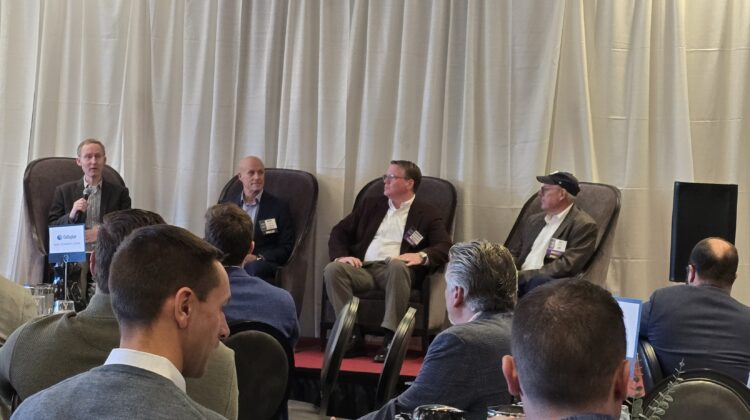
According to local business leaders and economic policymakers who gathered at The Queensbury Hotel on Oct. 21, 2026, for the “Building Up the North Country” symposium hosted by the Albany Business Review, the answer is unequivocally both.
We are the nexus where the Capital District comes together with the North Country. We have oftentimes struggled with whether or not we are one or the other. We are not one or the other. We are both.
– Jim Siplon, President & CEO, EDC Warren County
The panel discussion, moderated by Albany Business Review Editor-in-Chief Greg Dahlmann, brought together Siplon, commercial real estate broker R. Mark Levack, and West Mountain Ski Area owner Spencer Montgomery. Together, they outlined an ambitious vision for a region navigating a profound structural pivot. As legacy industrial employers shutter operations and remote work reshapes domestic migration, the North Country is attempting to convert its pristine environment, lower density, and strategic geography into a sustainable model for 21st-century growth.
An Economy in Transition
The regional real estate and employment landscape presents a study in stark contrasts. While high-tech corridors like Saratoga County continue to absorb vast capital, Warren County has weathered significant contraction in traditional manufacturing and heavy industry.
R. Mark Levack, president of Levack Real Estate Inc., who has tracked local commercial and residential markets for 41 years, provided sobering historical context. At the peak of the market in 2004, Warren County recorded 1,003 arm’s-length real estate transactions totaling roughly $853 million. By contrast, figures through the third quarter of 2026 stood at 616 transactions representing $187.6 million in total volume.
Compounding this real estate contraction has been a series of job losses across the region. Recent closures and downsizings include the Great Meadow Correctional Facility (approximately 600 jobs), Essity Tissue (more than 300 jobs), and Lehigh Cement (80 to 90 positions).
Despite these headwinds, Levack cautioned against fatalism, pointing to the region’s historical capacity to adapt:
This is not anything to be overly alarmed at because while it is bad, it is tragic… the real estate economy is constricting, but there’s hope and we have all these different emerging economies. We are resilient and we’re progressing in spite of those trends.
– R. Mark Levack, president, Levack Real Estate Inc.
Siplon echoed that sentiment, emphasizing that manufacturing has rarely accounted for more than 25% of the local economy, even during its mid-20th-century peak. Instead, the area relies on a tripartite economic base: the park economy, service sectors anchored by Glens Falls Hospital — the largest employer north of Albany — and an expanding enterprise economy. He cites the region’s abundant fresh water, access to wilderness, and proximity within a four-hour drive of every major East Coast metropolitan market:
The economy around us, the world around us is shifting, but we are positioned in a way that I don’t think we realize how strategically positioned we are.
– Jim Siplon, President & CEO, EDC Warren County
Overcoming Infrastructure Bottlenecks
If the North Country’s natural assets are its primary attraction, its physical infrastructure remains its most stubborn bottleneck. Across Warren County, 92% of the land falls behind the “blue line” of the Adirondack Park, subjecting development to strict regulatory oversight by the Adirondack Park Agency and complex municipal funding hurdles.
The panel noted that basic utility capacities — particularly municipal sewer, power grid throughput, and water delivery — frequently dictate what can or cannot be built. Siplon pointed to North Creek as an instructive case study. After 30 years and five failed public referendum elections, North Creek installed a municipal sewer system. The moment construction began, more than $25 million in private investment flowed into the hamlet, which had seen virtually no new development in half a century.
Siplon argued that state funding models must adapt to rural park realities:
We should not ask the residents of North Creek, a community of less than a thousand people, to pay the same fixed cost that we do for a community that has a hundred times more residents. They can’t carry the cost. So, we’ve got to change the ratios under which those investments are made.
– Jim Siplon, President & CEO, EDC Warren County
Concurrently, Montgomery outlined utility constraints at West Mountain, where snowmaking relies on municipal drinking water capped at 3,000 gallons per minute. To recover quickly from midwinter thaws and expand terrain, West Mountain is seeking a dedicated raw water main from the Hudson River to boost capacity to 6,000 to 9,000 gallons per minute.
At the same time, Montgomery is advancing plans for “The Woods at West Mountain,” a 512-door master-planned development designed by Bull Stockwell Allen, the architecture firm behind premier national destinations such as Spruce Peak at Stowe and the Inn at Sundance. The project aims to capture an overnight tourism market that currently bypasses New York entirely.
Montgomery notes that while New York logs more skier visits than any state in the nation, most overnight ski tourism leaks to Vermont, New Hampshire, and Maine due to a lack of integrated resort amenities:
There’s surprisingly no ski-and-stay market in New York State. If we just siphon off a very small percentage of that massive market that’s just driving by us right now… the demand is going to be incredibly strong.
– Spencer Montgomery, Owner, West Mountain Ski Area
Meanwhile, economic leaders are applying a similar strategy of infrastructure adaptation to Tech Meadows, a city-owned property near Exit 18 of the Northway originally built with federal Economic Development Administration funds. Realizing that the site’s small lot sizes and proximity to residential neighborhoods make it unsuited for large-scale microchip supply chain manufacturing, EDC Warren County funded an initiative to re-envision the park for mixed-use commercial space and residential housing, unlocking land that sat mostly idle for nearly 25 years.
Housing, Zoning, and the Remote Workforce
Unlocking regional demand requires a fundamental shift in local land-use policies. Levack advocated for modernizing outdated municipal codes and embracing form-based zoning, which establishes clear architectural and structural criteria up front, streamlining approvals for developers.
You can’t win a modern game with an old playbook.
– R. Mark Levack, president, Levack Real Estate Inc.
Levack noted that Glens Falls’ code book has not undergone a comprehensive update in nearly 18 years, adding that while social responsibility dictates a continuous need for subsidized and affordable housing, municipalities must also incentivize market-rate and high-end urban condominiums to ensure a balanced tax base.
Montgomery emphasized that higher density, when executed thoughtfully, serves as an environmental preservation tool rather than a threat:
If you do high density appropriately, it preserves the area. It doesn’t destroy it. The alternative is just commercial sprawl.
– Spencer Montgomery, Owner, West Mountain Ski Area
Meanwhile, the post-pandemic rise of remote and hybrid work is redefining commercial real estate. While traditional large-footprint corporate office demand has contracted — exemplified by downtown Glens Falls’ landmark Monument Square Tower, which saw occupancy plummet to 40% following tenant exits during the pandemic — smaller hybrid footprints are steadily filling the void. Through custom buildouts for legal, engineering, and medical firms, the tower’s occupancy has rebounded above 60%.
Siplon observed that much of the region’s newest office space exists in home offices and residential third bedrooms across the county. He recounted meeting a group of young entrepreneurs who were looking to relocate together as a group of friends, evaluating sites across the Northeast and ranking Glens Falls unexpectedly high alongside established cultural hubs like Burlington, Vermont, and Portland, Maine.
They were looking for microbreweries. They were looking for live music. They were looking for culture. They were looking for coffee shops and shared workspaces. They found everything they were looking for here.
– Jim Siplon, President & CEO, EDC Warren County
A Collaborative Blueprint for the Next Decade
As the panel concluded, the speakers addressed audience questions regarding labor shortages and renewable energy development. Montgomery outlined how acute shortages in specialized trades — such as lift mechanics and snowcat operators — forced West Mountain to partner directly with local Washington-Saratoga-Warren-Hamilton-Essex BOCES programs, hosting athletic-style “signing days” to recruit local high school graduates trained in welding and mechanics.
In their closing remarks, each panelist offered a single imperative for the region over the next decade:
- Mark Levack called for an aggressive, targeted marketing effort to broadcast the region’s successes and attract upwardly mobile young families.
- Spencer Montgomery urged community leaders to capitalize on the region’s authentic character and unvarnished appeal, preserving what makes the North Country distinct while building high-end amenities to capture visitor capital.
- Jim Siplon stressed regional collaboration over municipal rivalry.
We do not need to compete with each other. If it goes in region, it’s going to benefit the region. We are the backyard of the region… We need to advance our value as place-driven, and we need to collaborate.
– Jim Siplon, President & CEO, EDC Warren County